Crochet tools for beginners: what you need and what can wait
You can start learning crochet with one hook and one ball of yarn. Add scissors and a yarn needle for finishing, a couple of removable stitch markers, and a ruler you may already own.
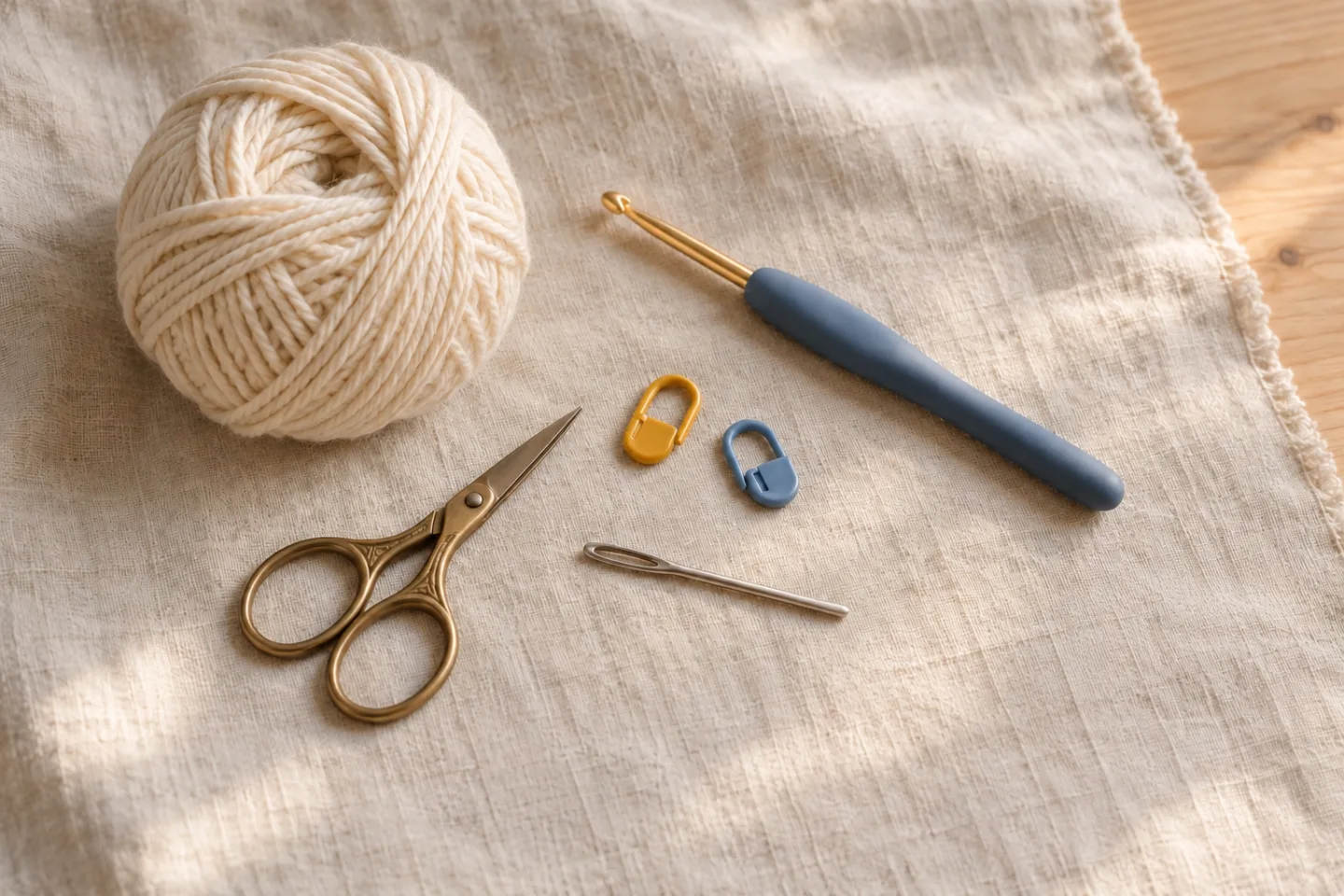
That is a useful first kit. A case full of unfamiliar accessories can wait. The aim is to make your first stitches easy to see and your tools easy to use. You can decide what else belongs in your yarn basket after you have made something small.
Start with yarn you can see clearly
For a first practice piece, we suggest a smooth yarn in a pale or medium colour. Look at the strand before choosing it: can you see where one loop would end and the next begin? Very fuzzy, heavily textured or dark yarn adds an extra challenge when you are still learning where to put the hook.
There is no need to choose your forever yarn today. Pick one colour you like and keep the label. It tells you about the fibre, length, care and suggested tools. The weight of the ball in grams tells you how much yarn is in the package; it does not tell you how thick the strand is. For thickness, look for the yarn-weight category and the manufacturer's description.
If you already have instructions for a project, begin with the yarn they specify. A practice swatch gives you more freedom than a fitted hat or a toy with tightly worked fabric.
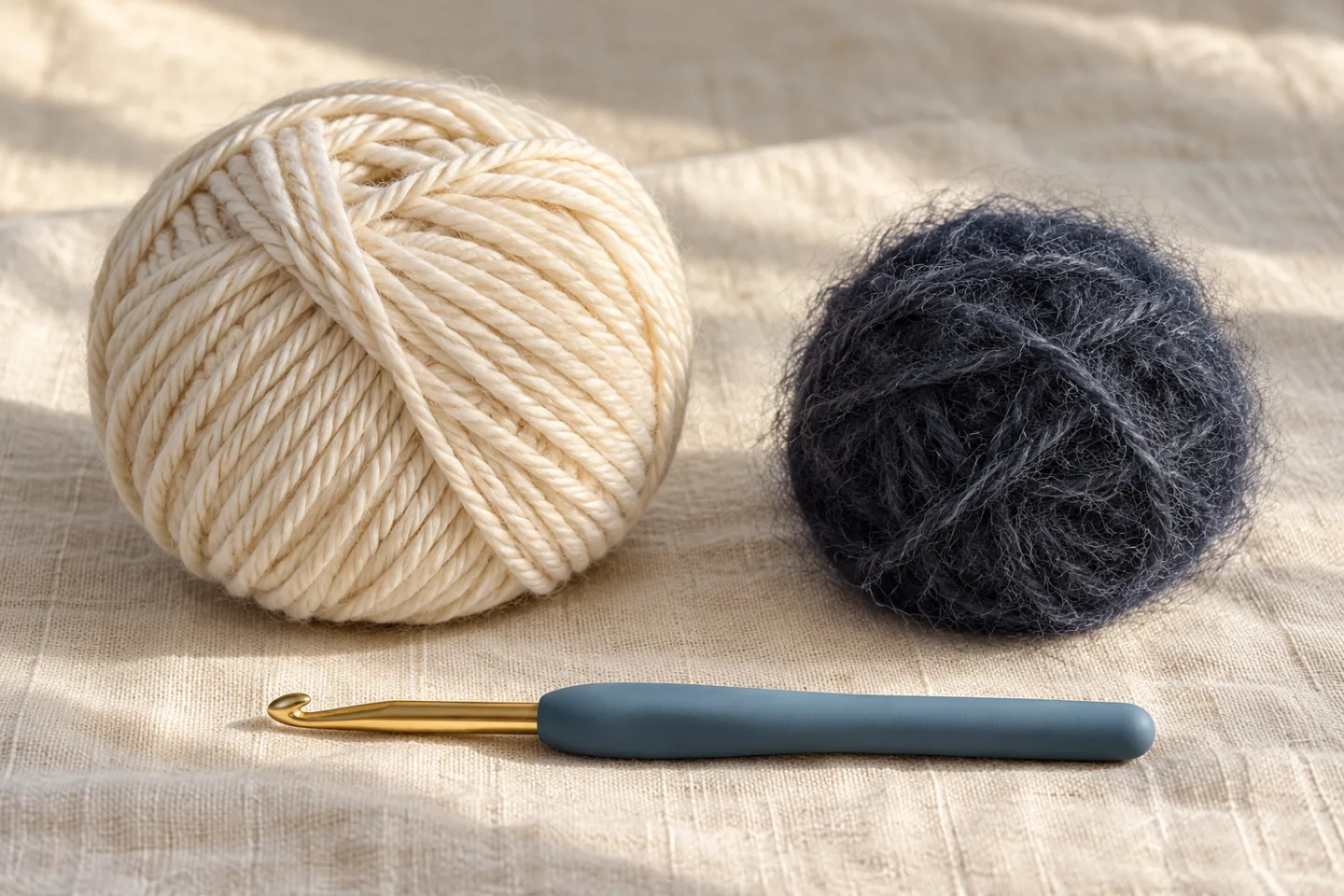
Choose one hook to go with it
Read the crochet hook recommendation on the yarn label, or the materials list in your chosen lesson. Check the size in millimetres on the hook itself. A letter or number alone can be confusing when you move between brands or older sizing systems; our hook size converter can help interpret the label.
A 5 mm hook can be a useful practice option with a suitable medium yarn, but it is not the correct hook for every beginner or every project. The yarn, stitch and intended fabric all matter. When finished size matters, check the pattern's gauge rather than relying on the label alone.
Try holding the hook before committing to a large set. Pencil grip and knife grip are both options. A thicker handle may feel pleasant to one person and cumbersome to another. Choose something you can hold comfortably; an expensive handle is not a shortcut to even stitches.
Use scissors you already own
You need a clean cut when you finish a piece or change yarn. A small pair of scissors is handy, but a new embroidery set is not a requirement for learning a chain. If your existing scissors cut the yarn cleanly, use them.
Put them away safely when you finish, particularly if your project bag moves around the house.
Add a blunt yarn needle for finishing
A yarn needle, also called a tapestry needle, helps you weave in loose ends and sew crochet pieces together. Look for a blunt tip and an eye large enough for the yarn you are using.
This is easy to overlook when buying your first hook. You might finish the crocheting and still have tails to secure. Put the needle with your scissors so that finishing the piece does not become a separate shopping task.
Keep a couple of removable markers nearby
Markers give you a visible reference when the stitches start to look alike. During a first lesson, you might use one to identify a stitch you want to find again. Later, they can help mark the beginning of a round or a repeat, following the pattern's instructions.
Choose markers that open so you can remove them from the fabric. A contrasting scrap of yarn can also mark a stitch; you do not have to buy a large box before trying the idea. If you use a locking marker, close it gently and choose a size that fits without stretching the stitch.
Our stitch and row counter can keep a number for you. A marker shows a place in the fabric. They solve related problems, but one does not entirely replace the other.
Borrow a ruler before buying more measuring tools
A straight ruler is useful when you begin comparing stitch sizes or measuring a small swatch. A flexible tape becomes helpful for curved measurements, such as measuring around a head. You do not need both for your first chain.
When you are ready to make something to a particular size, use our crochet gauge guide. The purpose of measuring is to find out what your fabric is doing, not to force it to match a number by stretching it.
What can wait?
Leave the ball winder, yarn bowl, blocking boards and full hook collection off the first shopping list unless your chosen project specifically needs them. They can be useful later, when you know which part of making you want them to help with.
Is a beginner crochet kit worth buying?
A kit is worth considering if you like its actual contents. Check the yarn, hook sizes and instructions, rather than choosing by the number of accessories in the photo. Ten tools you understand can be more useful than fifty you cannot identify—and your first lesson needs fewer than ten.
Gather your kit, then make a few stitches
Before you sit down, check that you have:
• One ball of suitable yarn, with its label.
- One matching crochet hook.
- Scissors and a blunt yarn needle for finishing.
- A couple of removable markers or contrasting yarn scraps.
- A ruler nearby for when you start measuring.
If you need examples of individual tools, our supplies guide explains the selection notes and available regional options. You do not need to buy the exact brands shown to follow a lesson.
Then open the beginner crochet guide. Start with a slip knot and a chain; when you are ready to make rows, move on to single crochet. You can build the rest of the kit around what you enjoy making next.
A note to take with you
Start with the tools for one small practice piece. Use what you have where it suits the lesson, and let the next project tell you what else you need.
Optional additions
A couple of useful things.
Use what you have first. If you need a hook or removable markers, these are options to consider.
A comfortable crochet hook
A 5 mm example for suitable yarn. Match your yarn label or pattern; one hook size will not suit every project.
Clover Amour 1047/H Crochet Hook, 5.0 mmLocking stitch markers
Openable markers help you find a stitch or the start of a round. A contrasting scrap of yarn works too.
Clover 3033 Quick Locking Stitch Marker SetReady for your first few stitches?
Your yarn is ready.
Let's make a beginning.
Follow the beginner guide from a slip knot to your first counted rows, at your own pace.
Start learning crochet